
Circular RNA at the Viral Host Interface
This webinar examined the transformative impact of these unique non-coding molecules on our understanding of infectious diseases
5/12/20261 min read
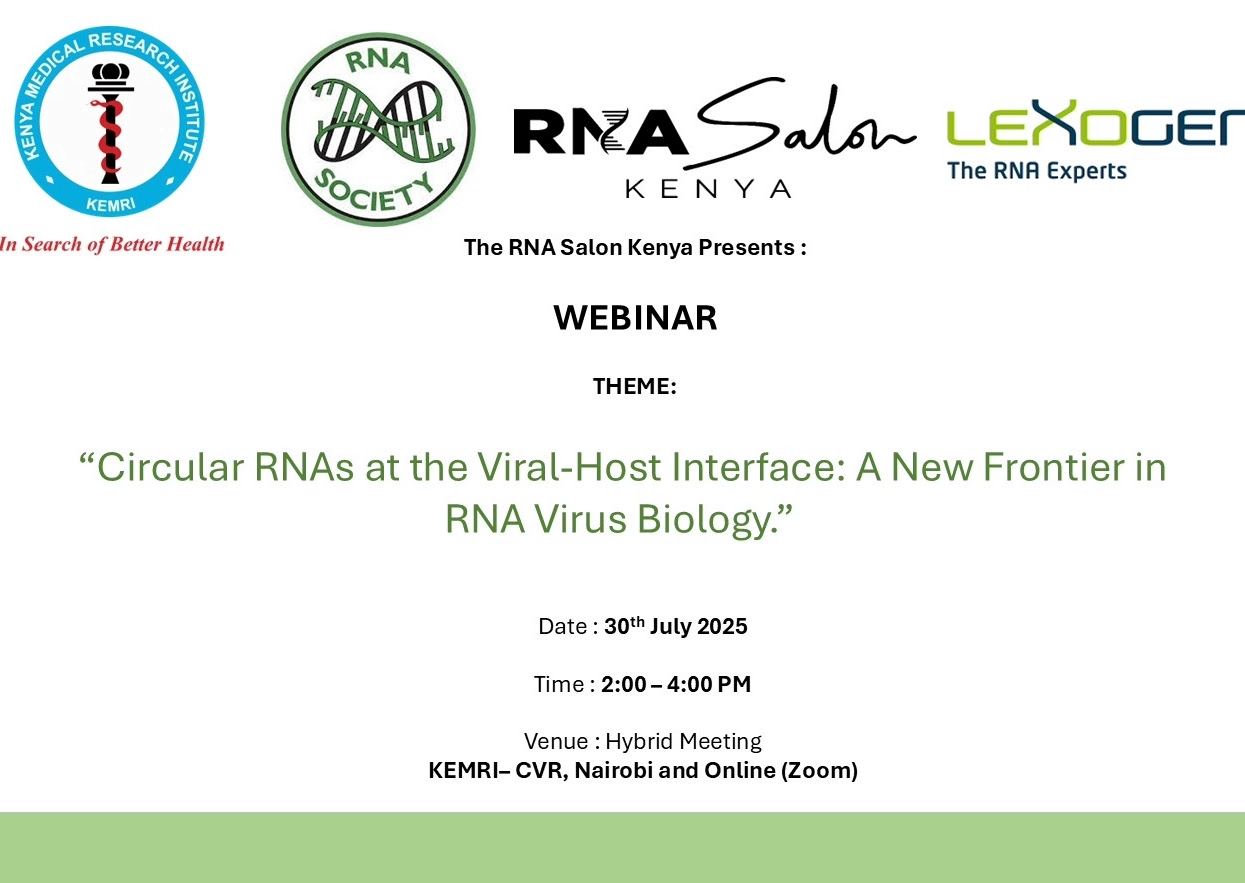

Held as a hybrid session on July 30, 2025, and organized by RNA Salon Kenya alongside KEMRI, the RNA Society, and Lexogen, the discussion began by defining circular RNAs (circRNAs) as single-stranded transcripts that form covalently closed loops via a process called back-splicing. Unlike traditional linear mRNAs, these molecules lack a 5' cap and 3' poly(A) tail, a structural distinction that makes them exceptionally resistant to exonuclease degradation.
A major focal point of the presentation was the evolutionary advantage provided by the high stability and long half-life of circRNAs within the cellular environment. The speakers discussed how this structural integrity allows circRNAs to persist much longer than their linear counterparts, making them ideal participants in the viral-host interface. Talking points likely detailed how both host cells and the viruses themselves (such as SARS-CoV-2 or HIV-1) generate these circular transcripts to modulate the cellular landscape during different stages of infection.
The core technical discussion centered on the functional roles of circRNAs as regulatory sponges or transcriptional drivers. The webinar explored how host circRNAs can sequester microRNAs (miRNAs) or proteins to either promote viral replication or trigger the innate immune response. Furthermore, specialized talking points highlighted virus-encoded circRNAs, such as those that bind to viral proteins like Tat in HIV-1 to enhance viral transcription, revealing a previously overlooked layer of pathogenesis that could be exploited for research.
Finally, the session concluded with the clinical potential of circRNAs as "enduring biomarkers" and a new platform for therapeutic development. The talk touched on advancements in RNA sequencing that allow for the precise identification of circRNA signatures in patient tissue or plasma, which could serve as diagnostic markers for viral progression. The speakers envisioned a future where circRNA-based expression platforms provide a more stable and long-lasting alternative to current mRNA vaccines, marking a significant shift in how we design biological countermeasures against broad-spectrum viral threats